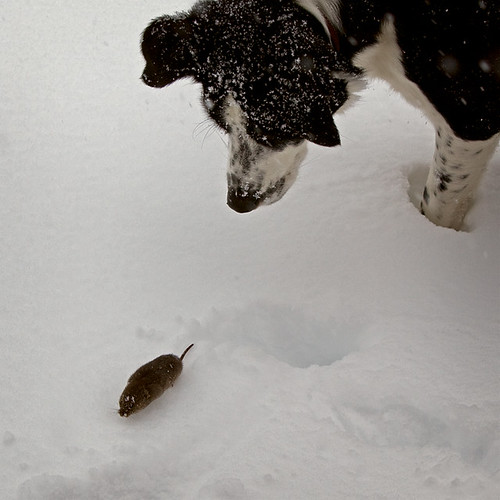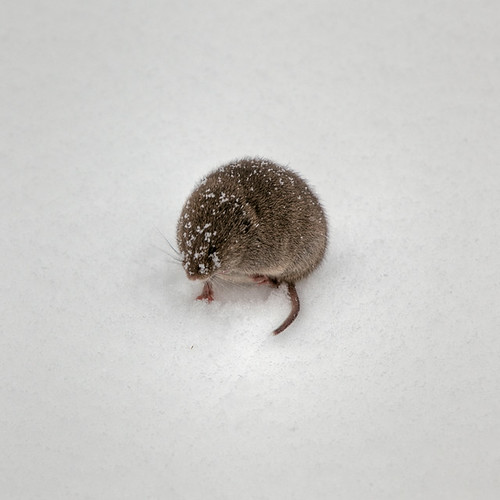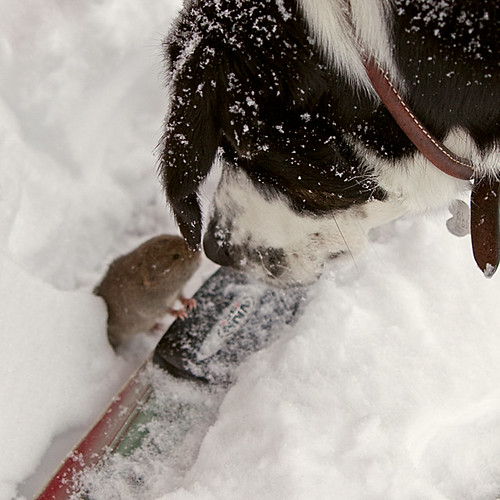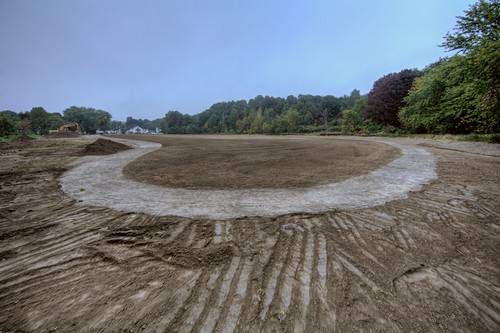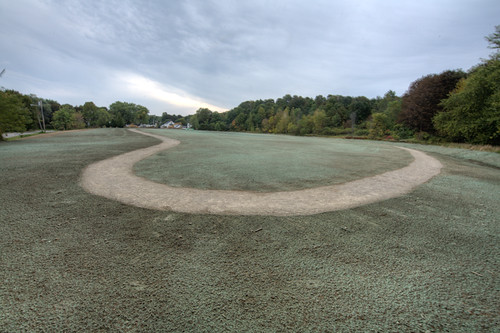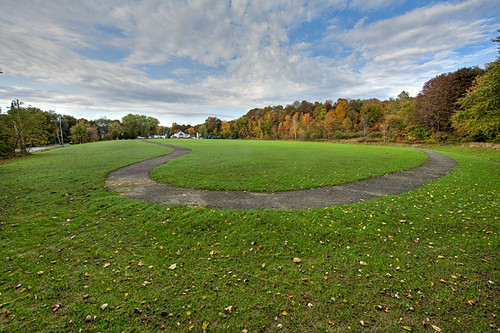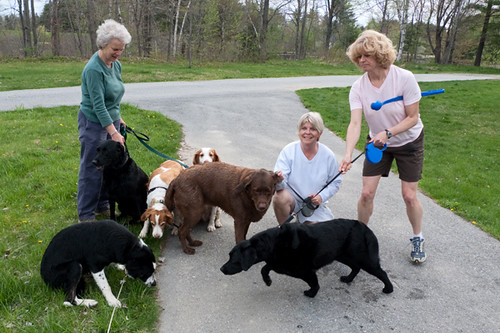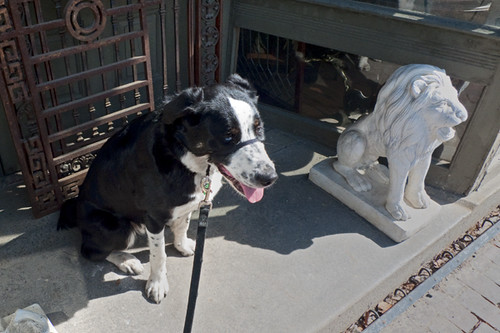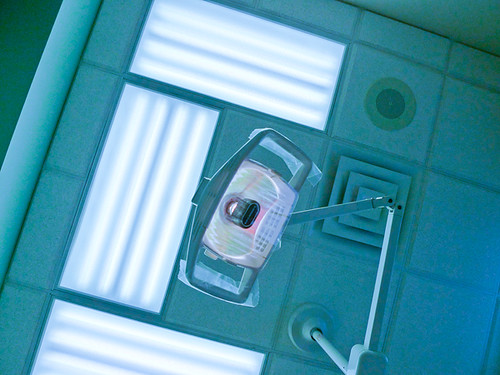
Where am I?
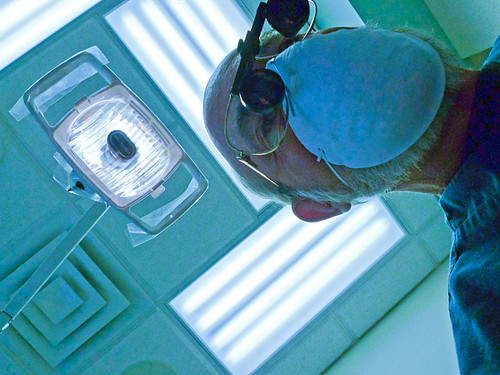
Who's this?

Uh oh!
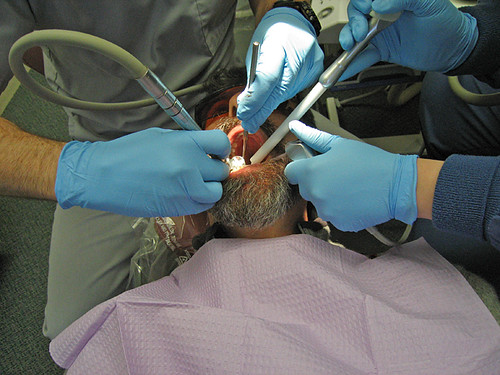
Mmmmggrruuhhppp!
 Every Thursday for the last five weeks or so, I've been taking a mushroom class at the Harris Center in New Hampshire. The class began with some ... well ... classwork, where we learned about mushroom evolution (the first mushrooms appeared about 425 million years ago), how many different species there are (over 110,000), how they reproduce and how they make their living (either mycorrhizally, saprotrophically or necrotrophically).
While all this is very interesting, what everyone in the class really wanted was to just go outside and actually start identifying some mushrooms!
Our instructor, Rick Van de Poll, was quite animated in the field - walking quickly and stopping abruptly when he spotted an interesting mushroom for us to identify.
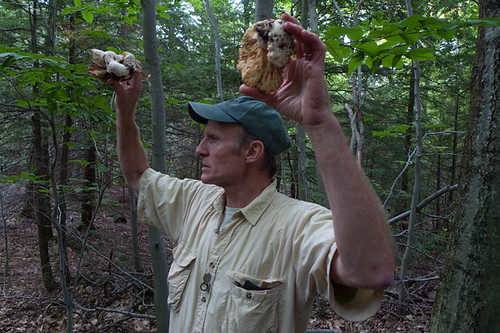
Here he holds up a couple of lactarius...
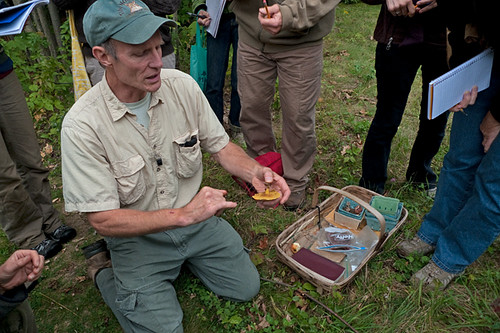
...and here, he points out the identifying features of the Suillus americanus - the Chicken Fat mushroom.
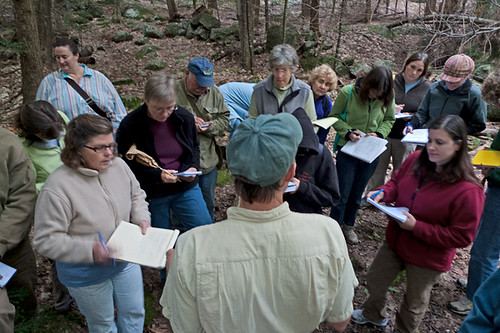
And here, the class watches with suspicion as he pops a bit of another mushroom into his mouth after saying "I think this is the poison variety, let me taste it". One thing we learn is that, even a poisonous mushroom is safe to taste AS LONG AS YOU DON'T SWALLOW!
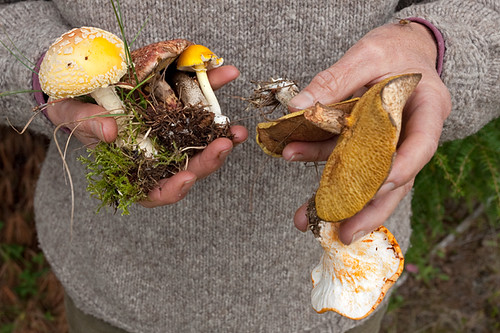
After every class, Jude and I spent the next weekend looking for mushrooms. They aren't hard to find.
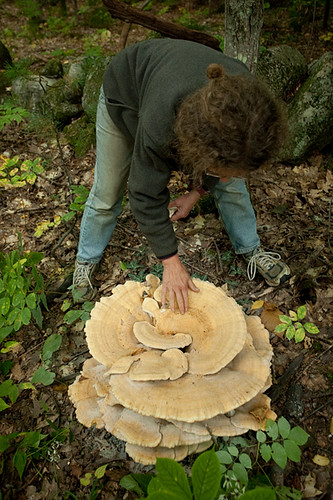
Some are quite easy to identify like this Bondarzewia berkeleyi.
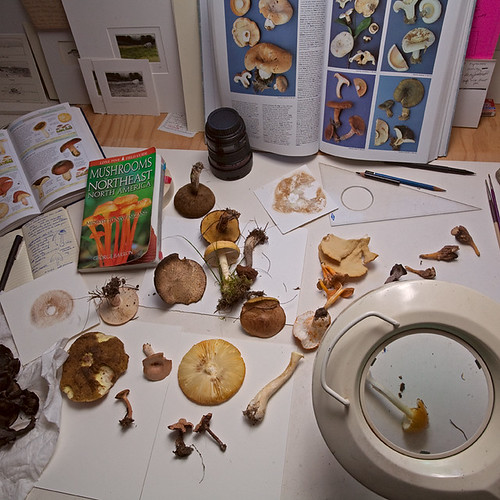
However, others languish on the desk, becoming more un-identifiable each day as they slowly deliquesce into goo or wither into little mushroom sticks.
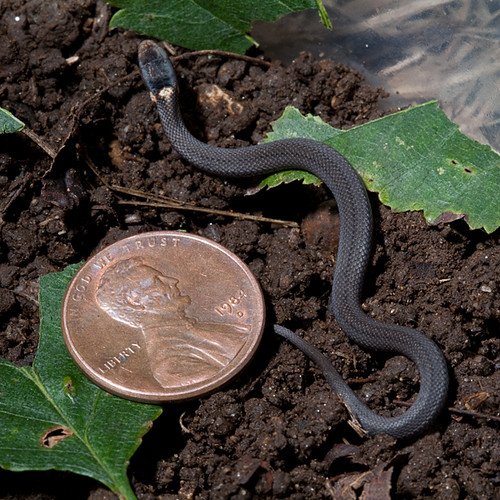
Jude seems to always be finding interesting things in her garden. Four-toed salamanders. Hibernating toads. Oil-can beetles. Snakes. Lots of snakes. Under the boards she lays down for mulch. Milk snakes, garter snakes and ring-necked snakes. The milk snakes are often large and have a rather nasty temperament. The garters are medium sized and move quickly into the grass when uncovered. The ring-necked snakes she found last week were small and plentiful.
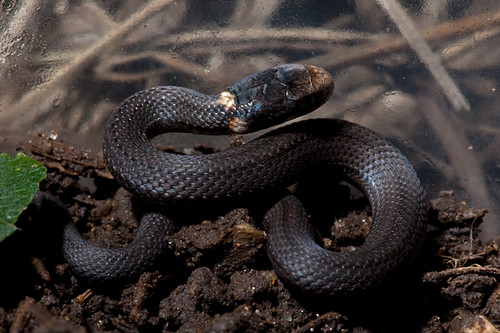
How small? This small:
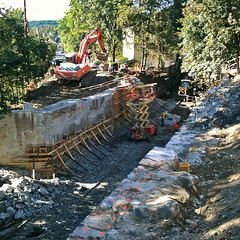
They're replacing a bridge across the defunct railroad tracks down the street from my house. They started the work in March or April or May - I really don't recall. I used to walk across the bridge almost everyday to get my mail at the post office. For a while, after they closed the bridge to automobiles, pedestrians where still allowed to cross it. Then pedestrians weren't supposed to cross it, but we still did. Then they pulled up all the decking, and though it was still technically possible to cross on the rusting steel girders that remained, I never tried it. Then they pulled up the girders. So now it's a longer walk to the post office for me.
On the bright side, though, they put this sign up down the street from my house.

And it's kind of funny, but I get a little thrill every time drive past it. I'm special. I'm cool. I'm a local! Stay off my street ya damn non-locals!
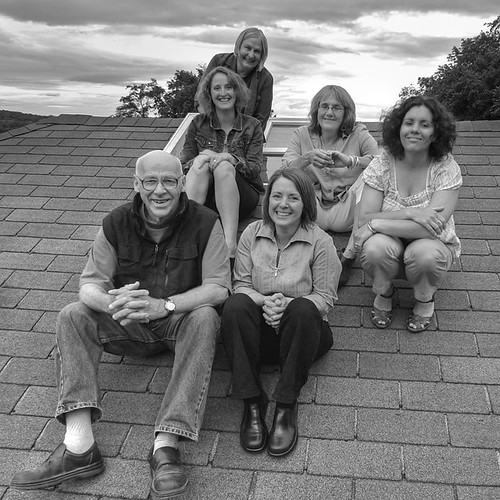
A group of artists...

... with short attention spans? No, just an example of how long it takes me to get a good portrait.
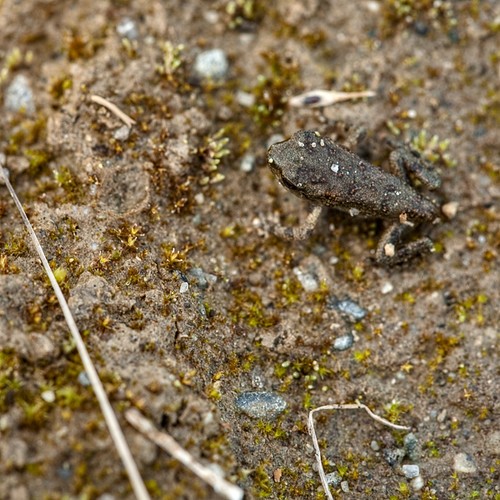
The toads have transmogrified from tadpoles and left their puddle in Vaughan Field.
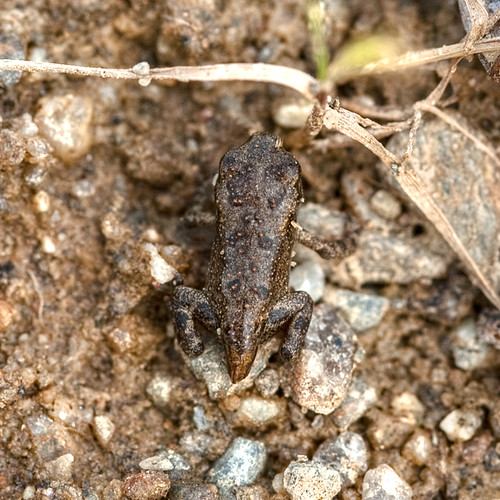
They blend in well with the gravelly soil near their pool and are hard to see at first.
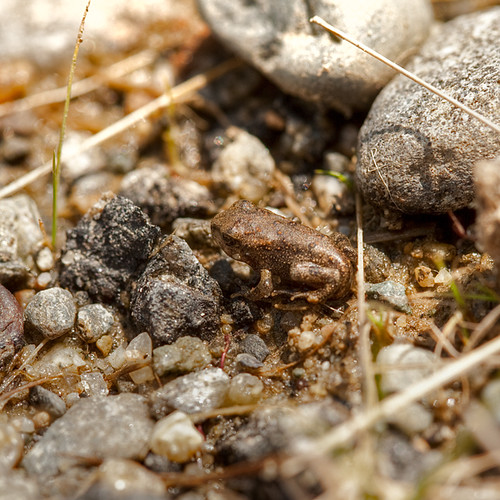
However, with practice they become easier to spot despite their tiny size.
How tiny?
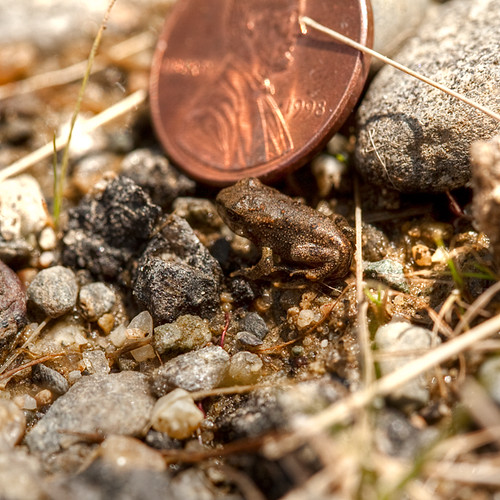
This tiny.
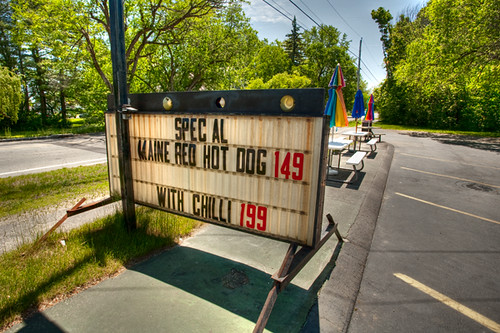
Sweets & Eats, South Windham
While other states are know for their maple syrup or cheese, in Maine, it's our red hot dogs. Originally conceived as a marketing gimmick by Schonland Brothers's Packing Company in 1895...
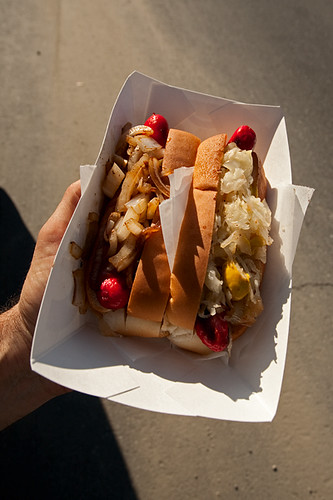
Doe's Dogs, East Millinocket
...the Maine Red Hot Dog (aka "Red Snappers" and "Red Hots") became the popular standard for hot dogs and is sought out by discerning road foodies when they visit the state. This natural-casing, all-pork dog (colored with a harmless vegetable dye) is now made by Jordan's Meats in Portland Maine.
I happened to be walking past the City Tomb the other day (yeah, I walk around in cemeteries - got a problem with that?) and noticed the door was open!
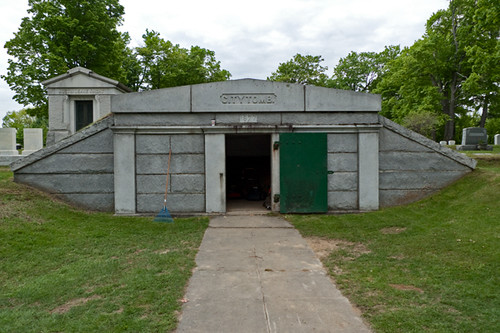
Have been raised Catholic, all kinds of iconic images filled my head. But as I approached for a peek, I was disappointed to find only two Craftsmen lawn mowers.
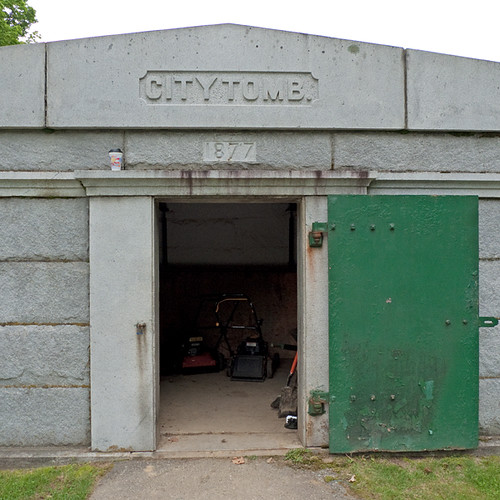
The Big-Gulp cup on the ledge should have been a give away.
Jeff Kirlin and I continue our effort to photograph every Grange Hall in Maine. I drove to Boston last weekend and managed to photograph another dozen or so on the way down and back.
Most Grange Halls have a distinctive architectural design and are easy to spot. They're usually rather simple, barn like structures like the ones below:

Mousam Lake Grange in Shapleigh

Highland Lake Grange in Westbrook

Bauneg Beg Grange in North Berwick

Hollis Grange
However, some Granges are a bit fancier like these:

Pownal Grange (now the Town Office)

Benton Grange

Waterboro Grange

John F. Hill Grange in Eliot
Alas, not all Granges Halls are grand examples of the classic New England meeting house design. Some are much humbler in appearance:

Litchfield Grange

Riverside Grange in Lebanon
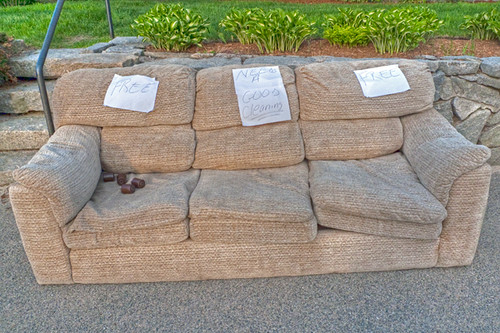
Even when giving away a free item, it's best to not point out the major product flaw.